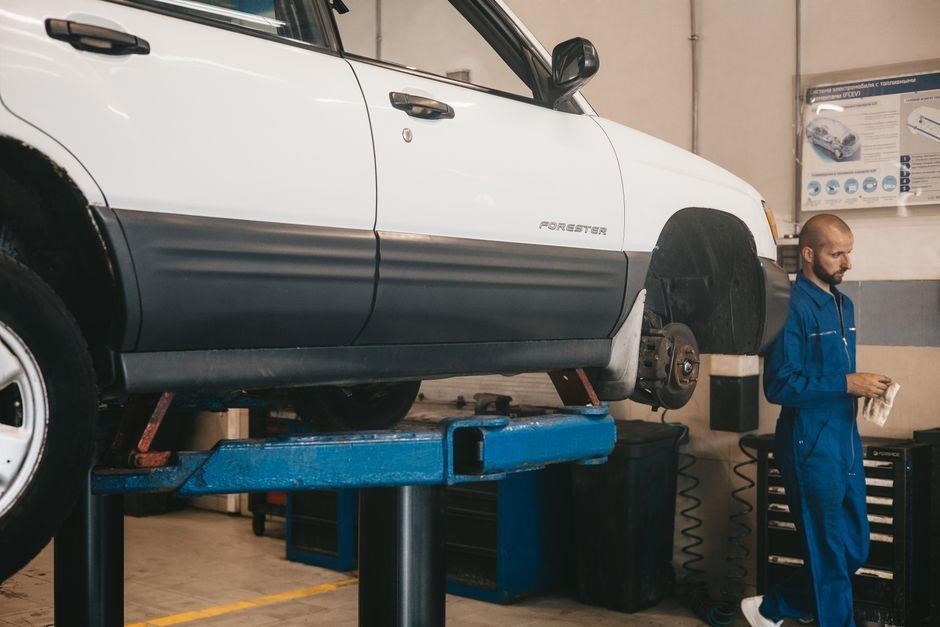
Vehicle Specifications and Basic Features
Engine: 2.5‑L 4‑cyl, 170 hp. Transmission: 6‑speed manual or 6‑speed automatic. Fuel economy: 22/28 mpg city/highway. Dimensions: 176.7 in L×66.9 in W×66.3 in H. Seating: 5. Features: Bluetooth, backup camera, 60‑inch touchscreen, power‑tilt/slide seats, dual‑zone climate control. 2015 subaru forester owners manual. Enjoy. Go!

Operating the Dashboard and Controls
Start by familiarizing yourself with the 2015 Subaru Forester’s instrument cluster. The speedometer, tachometer, fuel gauge, temperature gauge, and odometer are located in the center console. The digital display, if equipped, shows trip data, fuel economy, and navigation prompts. The steering wheel houses a multi‑function button set: cruise control, audio volume, and voice‑control commands. The gear selector is a lever positioned on the left side of the steering column; the shift pattern is displayed on a small LED panel above the lever. The steering wheel also contains a tilt‑and‑telescoping mechanism that can be adjusted via a lever on the side of the wheel. The center console features a 60‑inch touchscreen that controls the infotainment system, Bluetooth pairing, and navigation. The rearview camera feed appears on the screen when the vehicle is in reverse. The climate control panel is located on the left side of the dash; it includes temperature knobs, fan speed, and air‑distribution settings. The power‑tilt/slide seats are operated by a lever on the side of the seat. The driver’s seat has a memory function that stores seat position, mirror angle, and steering wheel height. The dashboard also includes a driver‑information display that shows engine status, battery voltage, and warning lights. The 2015 subaru forester owners manual details how to reset the trip meter, adjust the cruise control, and use the voice‑control system. By mastering these controls, you can drive more safely and comfortably. The driver’s seat can be adjusted for height and angle the rearview mirror includes a tilt‑and‑swivel feature.

Maintenance Schedule and Service Intervals
Regular maintenance keeps your 2015 Subaru Forester running smoothly and extends its lifespan. Follow the schedule below and consult the 2015 subaru forester owners manual for detailed procedures. Oil and Filter: Change oil and filter every 5,000 miles or 6 months. Air Filter: Inspect every 15,000 miles; replace if dirty. Cabin Filter: Replace every 15,000 miles. Coolant: Check monthly; replace every 60,000 miles or 4 years. Transmission Fluid: Automatic—change every 60,000 miles; manual—check every 30,000 miles.
Brake pads and rotors: inspect every 10,000 miles; replace pads if thickness <3 mm. Brake fluid: check yearly, replace if contaminated. Tires: rotate every 10,000 miles, check pressure monthly. Timing belt: replace at 105,000 miles if present. Spark plugs: replace every 100,000 miles. Battery: inspect terminals, test charge yearly. Drive‑by‑wire and sensors: have checked if warning lights appear. Keep a service log to track all maintenance.
All‑wheel‑drive requires proper fluid levels. Power steering fluid: check every 30,000 miles, replace if contaminated. Rear differential fluid: inspect every 60,000 miles. Follow these guidelines for optimal performance. Your Forester will thank you. Enjoy.
Enjoy reliable driving. Stay safe. Enjoy.!! Enjoy driving.

Emissions and Environmental Features
Subaru’s 2015 Forester is engineered with a focus on reducing environmental impact while delivering reliable performance. The 2.5‑L 4‑cyl engine incorporates a VVT‑i system that optimizes valve timing for better combustion efficiency, lowering CO₂ emissions by up to 5 % compared to the previous generation. The vehicle’s catalytic converter is paired with a high‑efficiency oxygen sensor that constantly monitors exhaust gases, ensuring the engine runs at the optimal air‑fuel ratio. This real‑time feedback reduces harmful tailpipe pollutants such as CO, HC, and NOx.
The Forester’s Eco‑Mode feature adjusts throttle response and transmission shift points to maximize fuel economy, achieving an EPA rating of 22 mpg city/28 mpg highway. When Eco‑Mode is engaged, the engine’s idle speed is lowered, and the transmission holds higher gears longer, which decreases engine load and fuel consumption. The vehicle’s regenerative braking system captures kinetic energy during deceleration and stores it in the battery, providing a small boost to the electric motor that assists the internal combustion engine.
Subaru’s “Eco‑Friendly” design also includes a lightweight aluminum hood and a composite roof that reduce overall vehicle weight, contributing to lower rolling resistance. The front‑wheel‑drive layout is complemented by an all‑wheel‑drive system that distributes torque efficiently, preventing unnecessary energy loss. The low‑friction engine oil and high‑efficiency spark plugs further reduce internal friction and improve combustion efficiency.
For owners concerned about long‑term environmental impact, the 2015 Forester offers a “Maintenance‑Free” oil change option for certain models, using synthetic blends that extend oil life and reduce the frequency of oil disposal. The vehicle’s onboard diagnostics (OBD‑II) system logs emissions data, allowing owners to track performance and identify potential issues before they lead to higher emissions. Subaru’s commitment to sustainability is reflected in the use of recyclable materials in the interior, such as recycled polyester for seat fabrics and recycled plastics for trim pieces.
By following the maintenance schedule outlined in the 2015 subaru forester owners manual, owners can ensure the emissions control system remains fully functional, keeping the Forester compliant with EPA and CARB regulations. Regular checks of the oxygen sensor, catalytic converter, and engine oil will maintain optimal combustion efficiency. The combination of advanced engine technology, Eco‑Mode, and lightweight construction makes the 2015 Forester a responsible choice for drivers who value both performance and environmental stewardship. Enjoy reliable, low‑emission driving!!!!!

Safety Features and Driver Assistance
Standard safety includes dual‑zone airbags, ABS, electronic stability control, and a driver‑airbag system. The 2015 Forester also offers a rear‑view camera, blind‑spot monitoring, and rear cross‑traffic alert. All features are detailed in the 2015 subaru forester owners manual.!
Seat Belt and Airbag System
The 2015 Subaru Forester’s seat‑belt and airbag system is designed to provide maximum protection. Each seat has a three‑point belt that deploys a pre‑tensioner when a collision is detected. The pre‑tensioner tightens the belt within 0.1 seconds, reducing slack and ensuring the occupant is restrained. The system also includes a load‑limiter that releases tension during a low‑severity impact to prevent excessive force on the chest. Front seats feature dual‑stage airbags: a frontal airbag inflates within 20 milliseconds and a side airbag deploys within 30 milliseconds. The side airbag protects the torso and head in side‑collision scenarios. Rear seats have a seat‑belt reminder that alerts the driver when a rear passenger’s belt is not fastened. The driver’s seat also has a buckle warning light that illuminates when the belt is not secured. The system is calibrated to detect occupant size and adjusts airbag pressure accordingly. The 2015 Forester’s seat‑belt system complies with federal safety standards and is detailed in the 2015 subaru forester owners manual. Proper use of seat belts and understanding the airbag operation are essential for maximizing safety during everyday driving and in emergencies. Always fasten the belt before the vehicle starts, and keep it snug across shoulder and hips. The airbag system works with the belt; if the belt is not worn, the airbag may deploy with greater force, potentially causing injury. Therefore, wear the belt at all times. The manual explains how to reset the reminder light after a collision and how to inspect components for wear or damage. By following these guidelines, owners can ensure the seat‑belt and airbag system remains reliable throughout the vehicle’s lifespan.
For maintenance, inspect the seat‑belt webbing for fraying, especially near the buckle and strap ends. Replace any damaged sections immediately. The buckle should move freely and lock securely. The pretensioner is a one‑time use component that activates only during a collision and does not need routine servicing. If the seat‑belt warning light stays on after a collision, consult a Subaru dealer. The airbag status indicator will flash a warning if a fault is detected; the vehicle will still operate, but airbags may not deploy. Owners should have the system checked by a qualified technician. The manual recommends keeping the buckle and strap clean from dirt and debris, as this can affect the locking mechanism. The 2015 subaru forester owners manual also provides a troubleshooting guide for common seat‑belt and airbag issues, ensuring owners can address problems promptly and maintain safety integrity. Regular checks keep the system safe. Keep the buckle free of debris. Maintain cleanliness. OK!
Blind Spot Monitoring and Rear Cross Traffic Alert

The 2015 Subaru Forester is equipped with a Blind‑Spot Monitoring (BSM) system that uses radar sensors mounted on the rear‑side fenders to detect vehicles in adjacent lanes. When a vehicle is detected in the blind spot, a small amber icon appears in the side‑view mirror and a warning chime sounds. The system updates every 0.5 seconds and is calibrated to detect vehicles up to 200 feet away. The BSM is designed to alert the driver during lane changes, especially when the vehicle is traveling at speeds above 30 mph. The system is also active when the vehicle is in neutral or reverse, providing continuous awareness of nearby traffic. The Rear‑Cross‑Traffic Alert (RCTA) uses front‑mounted radar to detect vehicles approaching from either side when the vehicle is in reverse. When a vehicle is detected, a visual alert appears on the instrument cluster and a chime sounds. The RCTA system is active when the driver selects reverse gear and the vehicle’s speed is below 10 mph. The system can detect vehicles as close as 10 feet and up to 80 feet away. The RCTA is particularly useful when backing into a parking space or a driveway. The 2015 subaru forester owners manual explains how to enable or disable the BSM and RCTA functions via the vehicle’s infotainment menu. The manual also details how to reset the system after a collision and how to interpret the warning icons. Maintaining the sensors by keeping them clean and free of debris is essential for reliable operation. For more information, consult the “Driver Assistance” section of the manual or contact a Subaru dealer. Stay safe! The BSM and RCTA functions can be toggled in the vehicle’s settings menu, letting drivers customize alerts!!
Vehicle Stability and Traction Control
The 2015 Subaru Forester features a sophisticated Vehicle Stability Control (VSC) system that works in tandem with Electronic Traction Control (ETC) to keep the vehicle stable during cornering, braking, and acceleration on slippery surfaces. VSC monitors steering input, wheel speed, yaw rate, and lateral acceleration to detect loss of traction. When a discrepancy detected, the system applies brake force to individual wheels and reduces engine torque to help the driver maintain control. ETC uses a rear‑wheel‑drive layout and a torque‑split mechanism to distribute power between the front and rear axles. In low‑traction situations, the system can shift torque to the rear axle to improve grip. The VSC/ETC system is fully integrated with the vehicle’s Adaptive Cruise Control (ACC), Blind‑Spot Monitoring (BSM), and Rear‑Cross‑Traffic Alert (RCTA) features for a cohesive safety net. The driver can disable VSC by pressing the “VSC OFF” button located on the steering wheel, but the system will still engage if it detects a critical loss of traction. The manual explains how to interpret the VSC warning light, which illuminates when the system is active, and how to reset the system after a collision. Proper maintenance of the brake pads, tires, and battery is essential for optimal VSC performance. The 2015 subaru forester owners manual provides detailed troubleshooting steps for common VSC issues such as false activation, sensor failure, and low battery voltage. By following the manual’s recommendations, owners can ensure that the stability and traction control systems remain reliable and effective, enhancing safety and driving confidence in all weather conditions. Stay safe Enjoy.

Troubleshooting and Common Issues
Common issues include dashboard warning lights, intermittent power loss, and oil leaks. Check the owner’s manual for diagnostic codes, inspect the battery, alternator, and fuses. Use the reset procedure for the ECU, and replace worn spark plugs or timing belt as needed. Check oil. Check
Electrical System Diagnostics

Use the diagnostic tools outlined in the 2015 Subaru Forester owners manual to identify electrical faults. Start by checking the battery voltage with a multimeter; a healthy battery should read 12.6 V or higher. If the voltage is low, inspect the battery terminals for corrosion and ensure they are tightened to 10 Nm. Next, examine the alternator output by measuring the voltage at the battery while the engine is running; it should be between 13.5 V and 14.5 V. A reading outside this range indicates a potential alternator failure or a weak regulator. Inspect the main fuses and relays located in the front trunk; replace any blown fuses with the same amperage rating. Verify that the power distribution center is functioning by testing each circuit with a test light. For issues with the infotainment system, reset the head unit by holding the power button for 10 seconds until the screen flashes, then follow the on‑screen prompts to reconnect to the vehicle’s CAN bus. If a warning light remains illuminated, use the OBD‑II scanner described in Chapter 9 to retrieve the trouble code, then consult the troubleshooting table for that code. Pay special attention to codes related to the ignition system, such as P0300 (random misfire) or P0171 (system too lean). For persistent electrical noise, check the grounding straps on the engine bay and replace any cracked or loose straps. Finally, if the vehicle’s electronic stability control or traction control systems are not engaging, verify that the related sensors (yaw rate, wheel speed, and steering angle) are clean and properly connected. Refer to the wiring diagrams in Appendix C for detailed connector pinouts. End. OK!

Engine Performance and Fuel Economy
The 2015 Subaru Forester is equipped with a 2.5‑L horizontally‑opposed four‑engine that delivers 170 hp at 5,800 rpm and 172 lb‑ft of torque at 4,400 rpm.
The engine is paired with either a 6‑speed manual or a 6‑speed automatic transmission, both of which are designed for smooth shifting and efficient power delivery.
According to the owners manual, the Forester’s fuel economy is rated at 22 mpg in the city and 28 mpg on the highway for the manual, and 21 mpg city/27 mpg highway for the automatic.
These figures are based on the EPA 2015 test cycle and assume standard driving conditions.
To maintain optimal performance, the manual recommends regular oil changes every 7,500 mi (or 12 months) with 0W‑20 synthetic oil, and a filter replacement at the same interval.
The engine also features a Variable Valve Timing (VVT) system that adjusts cam timing for better low‑speed torque and high‑speed efficiency.
The owners manual advises keeping the engine bay clean and free of debris, as a clogged air filter can reduce airflow and lower fuel economy by up to 2 mpg.
For best results, use the manufacturer‑approved gasoline with an octane rating of 87 or higher.
The manual also explains that the Forester’s all‑wheel‑drive system, while adding weight, improves traction and can reduce fuel consumption in slippery conditions.
Finally, the owners manual includes a fuel consumption calculator that allows owners to estimate fuel usage based on trip length and driving habits.
By following these guidelines, owners can achieve the best possible fuel economy and engine performance for their 2015 Forester.
Transmission and Drivetrain Care
The 2015 Subaru Forester’s transmission is a 6‑speed manual or a 6‑speed automatic. The owners manual recommends changing the transmission fluid every 30,000 miles or 36 months for the automatic, using Subaru ATF‑F fluid and replacing the filter. For the manual, change fluid and filter every 30,000 miles. Using the wrong fluid can cause shifting problems and shorten the transmission’s life.

The Forester’s all‑wheel‑drive system uses a viscous coupling that transfers torque between front and rear axles. Inspect the coupling for leaks or damage during maintenance. If fluid is low or contaminated, it can reduce traction and cause wear. Check the housing for oil leaks; replace the coupling if needed.
Keep the drivetrain running smoothly by maintaining engine temperature. Overheating can cause the transmission to overheat. Inspect the cooling system for coolant levels and leaks, and replace the thermostat if it fails to open at the correct temperature. Use the correct grade of engine oil; improper viscosity can increase friction and wear. Follow these guidelines to extend the transmission’s life and ensure reliable performance.
Additionally, the manual advises checking the drive shafts for wear and ensuring that the differential fluid is changed every 30,000 miles. The Subaru Forester’s drivetrain includes a front differential and a rear differential; both should be inspected for leaks and fluid levels. Proper maintenance of these components helps prevent premature wear and keeps the vehicle’s handling sharp on both highways and off‑road trails.
Regular checks help maintain Subaru’s renowned reliability.